960x0

Market Update – September2026

Market Update                                                                                                                                       September 2026

Markets Continue to Climb the Wall of Worry

In our July commentary, we noted that markets had continued to advance despite a steady stream of economic, geopolitical, and policy-related concerns, reaffirming the old saying that “the stock market climbs a wall of worry.” Those observations remain highly relevant today. Since then, investors have faced a new round of U.S. tariffs on Canadian products, ongoing Middle East tensions, persistent inflation concerns, rising interest rates, and increasing attention on the upcoming U.S. midterm elections. Yet despite these challenges, global financial markets have remained remarkably resilient.

This resilience is worth highlighting because it serves as an important reminder that headlines and market performance are often very different things. While uncertainty can create volatility, it does not necessarily prevent businesses from growing, companies from generating profits, or investors from achieving long-term returns.

The Latest Round of U.S. Tariffs; Canadian Tariffs start today – September 8th

On August 22, the United States implemented new tariffs on a range of Canadian products, expanding an already lengthy list of trade-related measures introduced over the past two years. The latest measures affect selected agricultural, manufacturing, consumer, dairy, and beverage products, while key sectors such as energy and certain critical resources remain largely exempt.

For Canadian businesses directly impacted, these tariffs can present meaningful challenges. Higher costs disrupted supply chains, and reduced competitiveness in U.S. markets are all legitimate concerns. However, it is important to distinguish between the impact on specific industries and the impact on the broader economy and financial markets. Many Canadian companies continue to adapt through market diversification, operational improvements, hedging strategies, and adjustments to supply chains.

An interesting perspective comes from a recent our CIO Office analysis that examined every major U.S. tariff announcement directed at Canada since late 2024. *Click image below to enlarge*
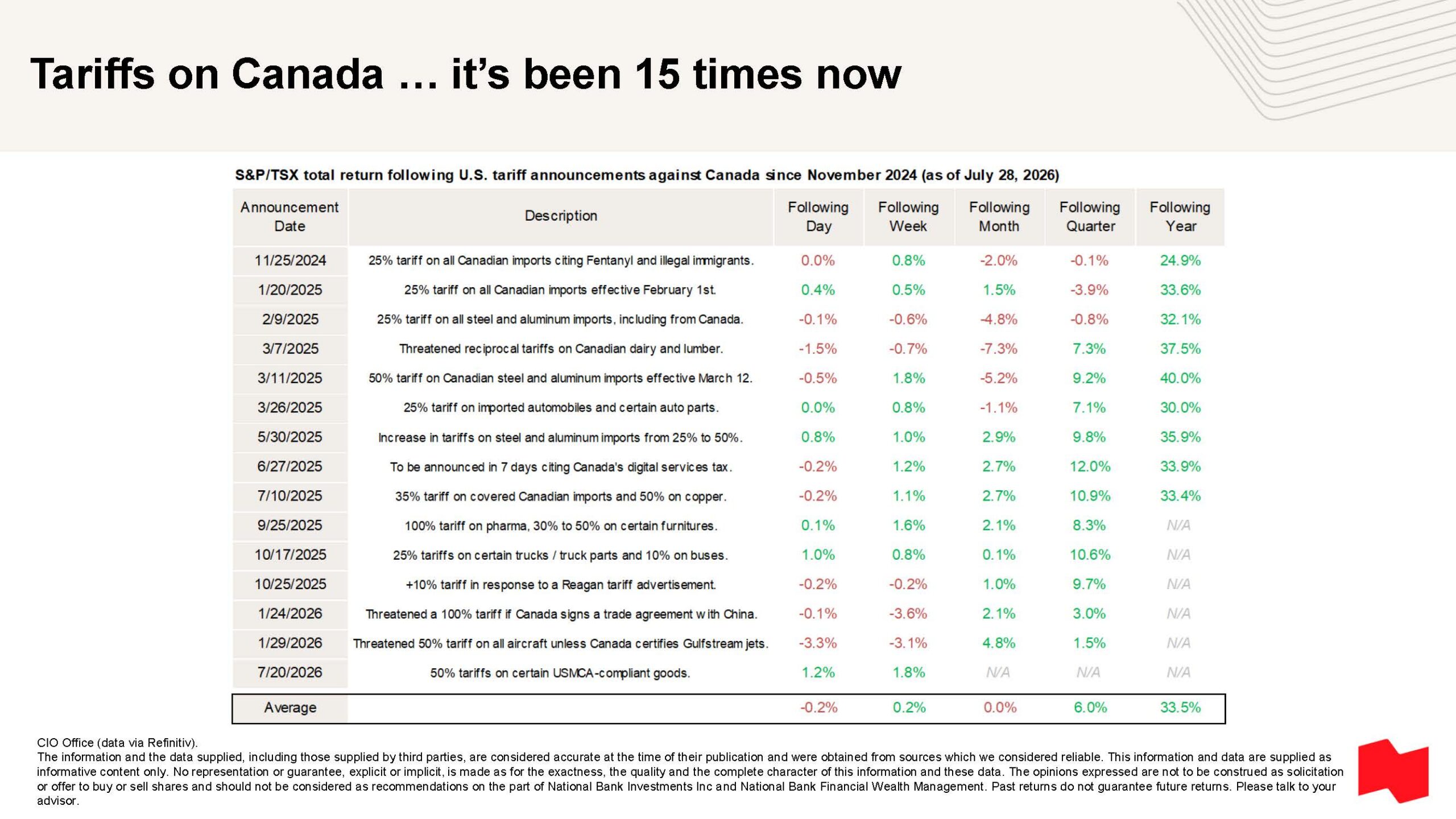
As the chart illustrates, the Canadian equity market has generally demonstrated an ability to look beyond tariff headlines and focus on longer-term fundamentals. In fact, many tariff announcements were eventually followed by positive market returns over subsequent quarters and years.

The lesson is not that tariffs are harmless. Rather, it is that markets are complex and forward-looking. They often adjust more quickly than headlines suggest.

Market Performance Remains Constructive

Despite trade concerns, global markets produced solid gains during August.

Highlights include:

  • S&P/TSX advanced 3.1% in August and reached a new all-time high on August 25th
  • Equity markets delivered another strong month in August. The S&P/TSX Composite Index gained approximately 1%, supported by surging gold and commodity prices, while the U.S. S&P 500 advanced roughly 2.5%, driven by strong corporate earnings and continued enthusiasm surrounding artificial intelligence. Despite ongoing trade and tariff concerns, investors remained focused on strong economic fundamentals and healthy profit growth, helping both markets reach new record highs during the month
  • MSCI Emerging Markets advanced 3.4% during the month and remains up more than 24% year-to-date.
  • International developed markets continued to post positive returns.
  • Gold gained nearly 10% during August.
  • Copper and broader commodity indexes also moved higher.
  • Financials, technology, and energy remained among the strongest-performing sectors globally.

Corporate earnings have also remained supportive. Strong profits, particularly from technology and artificial intelligence-related businesses, continue to underpin market sentiment. As we discussed in July, AI remains one of the most important investment themes globally. While enthusiasm for the sector may occasionally create periods of volatility, we continue to believe this technology has the potential to drive productivity and innovation for years to come.

 The Next Major Market Theme: U.S. Midterm Elections

Investors are increasingly turning their attention to the U.S. midterm elections scheduled for early November.

Historically, midterm election years have often been associated with elevated volatility as investors attempt to assess potential policy changes. Research suggests that markets can become more unsettled during the months leading into the election as uncertainty rises.

However, history also provides an important perspective.

While election-related noise tends to dominate headlines, financial markets have generally been influenced far more by factors such as:

  • Corporate earnings
  • Economic growth
  • Interest rates
  • Inflation trends
  • Technological innovation
  • Trade policy and geopolitics

Many market strategists expect that regardless of which party controls Congress, the broader economic and market drivers are likely to remain largely intact. In fact, markets have often rallied after elections once uncertainty is removed and investors gain greater clarity regarding the policy environment

For long-term investors, election results are generally less important than maintaining a disciplined investment process.

Staying Focused on What Matters

Periods like the one we are experiencing today can feel uncomfortable. Tariffs, elections, inflation concerns, geopolitical tensions, and rapidly evolving technologies all compete for attention and generate headlines. Yet history shows that successful investing is rarely about predicting the next news cycle.

Instead, it comes from maintaining a disciplined framework:

  • Diversifying across sectors, geographies, and asset classes.
  • Focusing on quality businesses and strong balance sheets.
  • Managing risk thoughtfully.
  • Rebalancing when appropriate.
  • Remaining invested through periods of uncertainty.

As we noted in July, uncertainty is not unusual. It is a permanent feature of investing. Our role is not to predict every headline, but to build portfolios that can remain resilient through changing economic and political environments while continuing to participate in long-term growth opportunities.

Today’s environment is no different.

While headlines remain dominated by tariffs, geopolitical events, and elections, we continue to see evidence of economic resilience, solid corporate profitability, and ongoing innovation. These factors provide a constructive backdrop for investors willing to remain patient and focused on their long-term objectives.

As always, if you would like to discuss how these developments relate to your portfolio or financial plan, please don’t hesitate to reach out.

We have prepared this commentary to give you our thoughts on various investment alternatives and considerations which may be relevant to your portfolio. This commentary reflects our opinions alone and may not reflect the views of National Bank Financial Group. In expressing these opinions, we bring our best judgment and professional experience from the perspective of someone who surveys a broad range of investments. Therefore, this report should be viewed as a reflection of our informed opinions rather than analyses produced by the Research Department of National Bank Financial.


Kind regards,

National Bank Financial

Rob Hunter                                                            Campbell Hunter, CIM®
Senior Wealth Advisor                                         Wealth Advisor & Portfolio Manager
T: 250.953.8415 | F: 250.953.8470                  Vancouver: 604.623.3282 |Victoria: 250.953.8422
Toll Free: 1.800.799.1175                                   Toll Free: 1.800.799.1175
[email protected]                                               [email protected]

Sources: CIO Office, NBF Economics & Strategy, National Bank Financial, Refinitiv, Globe and Mail, The Economist

National Bank Financial – Wealth Management (NBFWM) is a division of National Bank Financial Inc. (NBF), as well as a trademark owned by National Bank of Canada (NBC) that is used under license by NBF. NBF is a member of the Canadian Investment Regulatory Organization (CIRO) and the Canadian Investor Protection Fund (CIPF), and is a wholly owned subsidiary of NBC, a public company listed on the Toronto Stock Exchange (TSX: NA).

The opinions expressed herein do not necessarily reflect those of National Bank Financial. The particulars contained herein were obtained from sources we believe to be reliable but are not guaranteed by us and may be incomplete. The opinions expressed consider a number of factors including our analysis and interpretation of these particulars, such as historical data, and are not to be construed as a solicitation or offer to buy or sell the securities mentioned herein. Unit values and returns will fluctuate, and past performance is not necessarily indicative of future performance. Important information regarding a fund may be found in the prospectus. The investor should read it before investing.

The particulars contained herein were obtained from sources we believe to be reliable but are not guaranteed by us and may be incomplete. The opinions expressed are based upon our analysis and interpretation of these particulars and are not to be construed as a solicitation or offer to buy or sell the securities mentioned herein. The opinions expressed do not necessarily reflect those of NBF.

The securities or sectors mentioned herein are not suitable for all types of investors. Please consult your Wealth Advisor to verify whether the securities or sectors suit your investor’s profile as well as to obtain complete information, including the main risk factors, regarding those securities or sectors.

We have prepared this report to the best of my judgment and professional experience to give you my thoughts on various financial aspects and considerations. The opinions expressed represent solely my informed opinions and may not reflect the views of NBF.

Selling calls against stock (Covered Writing): Shares may need to be sold at the strike price of the option at any time prior to expiration. If the calls are assigned, further opportunity for appreciation in the underlying security above the strike price is foregone.

Risk/Reward of the strategy = Strike price minus the purchase price of the underlying plus the premium received from the sale of the call. The maximum loss is the same as holding a long position less the premium received.

The investment advice given only applies to residents of the provinces of British Columbia, Alberta, Manitoba, Saskatchewan, Ontario and Quebec.

National Bank Financial is a member of the Canadian Investor Protection Fund.

Preview       A close up of a text Description automatically generated     

1_xR4m0oOKz_jRgQU4Oge53g

Market Update – July 2026


Market Update                                                                                                                                               July 2026

Markets have continued to advance despite a steady stream of economic and geopolitical concerns, which is a useful reminder of the old saying that “the stock market climbs a wall of worry.” In Canada, market strength has been supported primarily by the Financials, Energy, and Utilities sectors. That said, one area we are watching closely is the Canadian dollar. The currency has weakened even with firmer oil prices, reflecting broader concerns around Canada’s low productivity growth and recent softness in GDP. From a portfolio perspective, one of our key hedges against this risk remains U.S. dollar exposure within the appropriate segments of client portfolios. As part of our value proposition, we have always opened a U.S. dollar side to accounts so clients can benefit from currency, something we have found to be far less common than expected in our industry.

In the United States, market leadership remains heavily influenced by investment in artificial intelligence and related technologies. A significant share of recent S&P 500 gains has come from a relatively concentrated group of large technology companies tied to this theme. We believe exposure to this area remains important, as AI may represent the early stages of a technological shift comparable in some ways to the early days of the internet. However, position sizing and discipline matter. At some point, markets will focus more carefully on whether earnings growth is keeping pace with the substantial capital spending now being committed to AI infrastructure, and that reassessment could bring periods of volatility.

The larger question may ultimately be broader than financial markets alone. AI-driven disruption has the potential to create economic and social consequences that are more complex than a traditional market downturn. This is less about asset prices in isolation and more about how companies, workers, and economies adapt to a powerful new productivity tool. In professional settings, one of the most immediate differences may be between those who learn to use AI effectively in their daily work and those who do not. While that transition may bring disruption, we remain optimistic that it will also create meaningful opportunities as the world learns, innovates, adapts, and finds its footing.

From an investment standpoint, this is exactly why we remain disciplined. We diversify across asset classes, sectors, and geographies; emphasize quality and liquidity; rebalance portfolios proactively; and avoid reacting emotionally to headlines. Corrections, whenever they occur and whatever the catalyst, should be viewed as a normal part of investing rather than a unique event. Our approach is built on the assumption that uncertainty is constant, rather than exceptional, and portfolios should be constructed accordingly.

Periods like this, when narratives feel especially dramatic, are often when a steady, process-driven approach adds the most value. We continue to monitor earnings closely as second-quarter reporting gets underway, particularly in areas where expectations are high. At the same time, our focus remains on long-term fundamentals, risk management, and ensuring that portfolios are positioned to participate in growth while remaining resilient through inevitable periods of volatility.

As always, we would be happy to discuss these themes in more detail. They are important developments to watch, but they do not change the core principles behind the plan we have built through disciplined diversification, quality holdings, thoughtful rebalancing, and a long-term focus through changing market conditions, taking advantage of volatility through the thoughtful implementation of our covered call strategy.

We have prepared this commentary to give you our thoughts on various investment alternatives and considerations which may be relevant to your portfolio. This commentary reflects our opinions alone and may not reflect the views of National Bank Financial Group. In expressing these opinions, we bring our best judgment and professional experience from the perspective of someone who surveys a broad range of investments. Therefore, this report should be viewed as a reflection of our informed opinions rather than analyses produced by the Research Department of National Bank Financial.

Kind regards,

National Bank Financial

Rob Hunter                                                            Campbell Hunter, CIM®
Senior Wealth Advisor                                         Wealth Advisor & Portfolio Manager
T: 250.953.8415 | F: 250.953.8470                  Vancouver: 604.623.3282 |Victoria: 250.953.8422
Toll Free: 1.800.799.1175                                   Toll Free: 1.800.799.1175
[email protected]                                               [email protected]

Sources: Globe and Mail, NBF Economics, The Economist

National Bank Financial – Wealth Management (NBFWM) is a division of National Bank Financial Inc. (NBF), as well as a trademark owned by National Bank of Canada (NBC) that is used under license by NBF. NBF is a member of the Canadian Investment Regulatory Organization (CIRO) and the Canadian Investor Protection Fund (CIPF), and is a wholly owned subsidiary of NBC, a public company listed on the Toronto Stock Exchange (TSX: NA).

The opinions expressed herein do not necessarily reflect those of National Bank Financial. The particulars contained herein were obtained from sources we believe to be reliable but are not guaranteed by us and may be incomplete. The opinions expressed consider a number of factors including our analysis and interpretation of these particulars, such as historical data, and are not to be construed as a solicitation or offer to buy or sell the securities mentioned herein. Unit values and returns will fluctuate, and past performance is not necessarily indicative of future performance. Important information regarding a fund may be found in the prospectus. The investor should read it before investing.

The particulars contained herein were obtained from sources we believe to be reliable but are not guaranteed by us and may be incomplete. The opinions expressed are based upon our analysis and interpretation of these particulars and are not to be construed as a solicitation or offer to buy or sell the securities mentioned herein. The opinions expressed do not necessarily reflect those of NBF.

The securities or sectors mentioned herein are not suitable for all types of investors. Please consult your Wealth Advisor to verify whether the securities or sectors suit your investor’s profile as well as to obtain complete information, including the main risk factors, regarding those securities or sectors.

We have prepared this report to the best of my judgment and professional experience to give you my thoughts on various financial aspects and considerations. The opinions expressed represent solely my informed opinions and may not reflect the views of NBF.

Selling calls against stock (Covered Writing): Shares may need to be sold at the strike price of the option at any time prior to expiration. If the calls are assigned, further opportunity for appreciation in the underlying security above the strike price is foregone.

Risk/Reward of the strategy = Strike price minus the purchase price of the underlying plus the premium received from the sale of the call. The maximum loss is the same as holding a long position less the premium received.

The investment advice given only applies to residents of the provinces of British Columbia, Alberta, Manitoba, Saskatchewan, Ontario and Quebec.

National Bank Financial is a member of the Canadian Investor Protection Fund.

Preview       A close up of a text Description automatically generated     

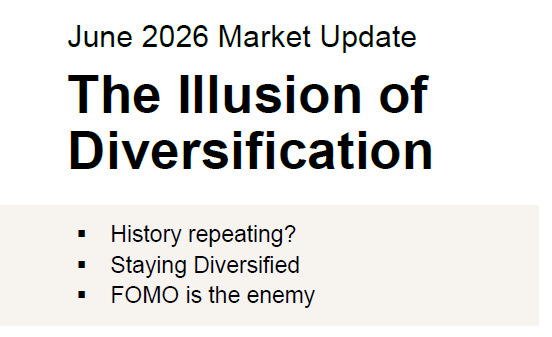
The Illusion of Diversification

Most of the worlds wealthiest people have built their fortunes by betting on themselves or by inheriting money from someone who once did. For instance, tech billionaires like Larry Page and Sergey Brin (Google), Jeff Bezos (Amazon) and Mark Zukerberg (Facebook) took risks by creating businesses that opened up new frontiers and have dominated society in a way that we’ve never quite seen before. Their hard work paid off spectacularly, allowing them to build the kind of historic generational wealth that most of us can only dream of.

Of course, being an entrepreneur is not for everyone. It typically means working very long hours, taking life altering risks, adding debt and reinvesting in the business rather than taking significant cash out. It takes discipline and some luck, as most new businesses are a concentrated bet on one industry. In other words, it’s putting all your eggs in one basket while the odds are against you. According to the U.S. Bureau of Labor Statistics, typically 20% of new businesses don’t make it past the first year while almost half don’t survive year five (current data is harder to come by in Canada). As tantalizing as the success stories above are, they are also huge anomalies.

For most people, wealth generation means investing in securities like stocks and bonds, rather than entrepreneurship. As shareholders we don’t have a meaningful say in how a company operates or truly know the day-to-day interworking of a firm like a founder would. This is why we’re taught to diversify away our risk by investing in many baskets rather than just one.

Click here to read the full article and gain deeper insight.

Sincerely,

National Bank Financial

Rob Hunter                                 Campbell Hunter

Senior Wealth Advisor               Wealth Advisor & Portfolio Manager CIM®

National Bank Financial – Wealth Management (NBFWM) is a division of National Bank Financial Inc. (NBF), as well as a trademark owned by National Bank of Canada (NBC) that is used under license by NBF. NBF is a member of the Canadian Investment Regulatory Organization (CIRO) and the Canadian Investor Protection Fund (CIPF), and is a wholly-owned subsidiary of NBC, a public company listed on the Toronto Stock Exchange (TSX: NA).


Canada–U.S.: Gaming Out the Trade Negotiations

Our geopolitical analyst Angelo Katsoras examines the outlook for a Canada-focused trade agreement, the shift toward regionalized supply chains and economic security, and how recent Canada–China trade developments may shape future negotiations.

Click here to read the full article and gain deeper insight.

Sincerely,

National Bank Financial

Rob Hunter                                 Campbell Hunter

Senior Wealth Advisor                 Wealth Advisor CIM®

National Bank Financial – Wealth Management (NBFWM) is a division of National Bank Financial Inc. (NBF), as well as a trademark owned by National Bank of Canada (NBC) that is used under license by NBF. NBF is a member of the Canadian Investment Regulatory Organization (CIRO) and the Canadian Investor Protection Fund (CIPF), and is a wholly-owned subsidiary of NBC, a public company listed on the Toronto Stock Exchange (TSX: NA).


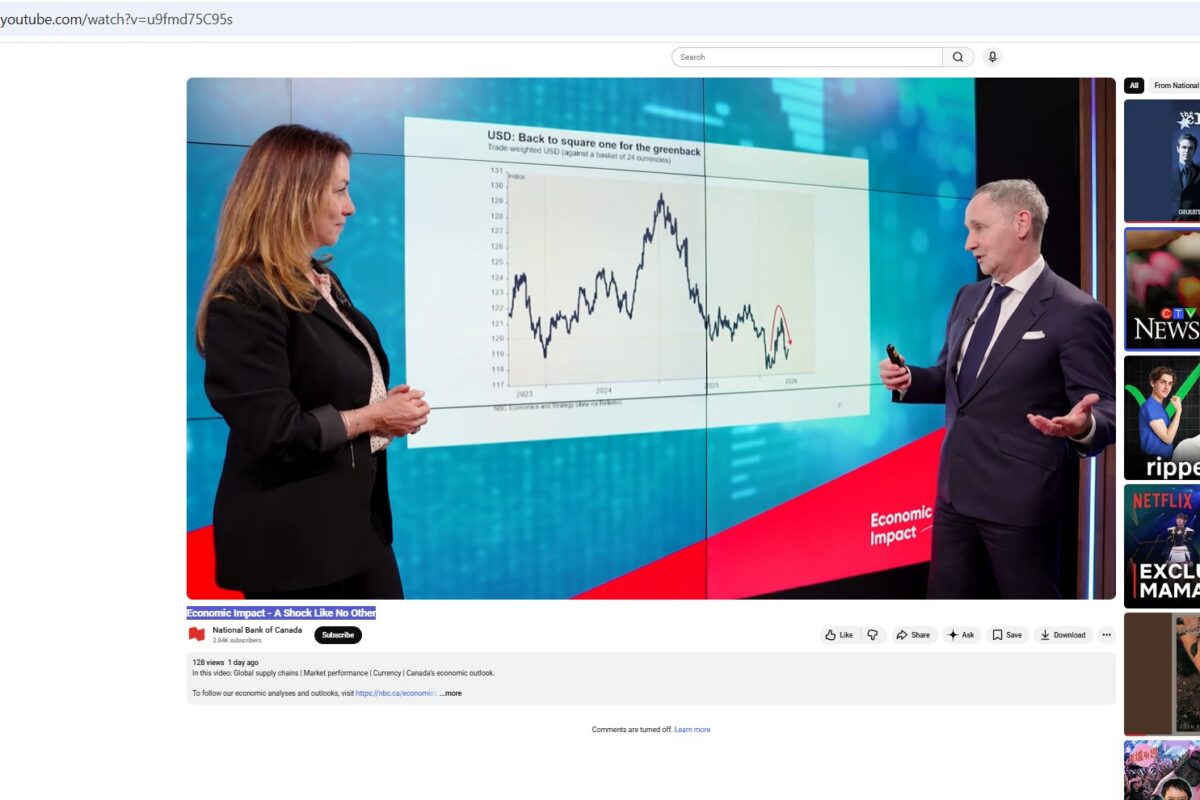
Economic Impact – Canada Is Not in A Recession


Canada enters the second quarter on firmer footing, shaking off a soft start to the year that stops short of a true recession. A sharp rebound in full-time employment and a surge in energy exports are setting the stage for stronger growth, even as the loonie weakens under shifting market forces. At the same time, renewed supply chain stress, driven by ongoing geopolitical disruptions, is keeping inflation risks alive and central banks on edge. Equity markets remain buoyant, but much of the good news is already priced in, raising questions about how much upside remains. Meanwhile, intensifying competition in AI, particularly from China, is challenging the sustainability of elevated expectations. Nancy Paquet and Stéfane Marion break down what it all means for investors and the road ahead.

Sincerely,

National Bank Financial

Rob Hunter                                 Campbell Hunter

Senior Wealth Advisor                 Wealth Advisor CIM®

National Bank Financial – Wealth Management (NBFWM) is a division of National Bank Financial Inc. (NBF), as well as a trademark owned by National Bank of Canada (NBC) that is used under license by NBF. NBF is a member of the Canadian Investment Regulatory Organization (CIRO) and the Canadian Investor Protection Fund (CIPF), and is a wholly-owned subsidiary of NBC, a public company listed on the Toronto Stock Exchange (TSX: NA).


rhunterwealth.ca